
Electric Panel Heater Installation: What Homeowners Need to Know
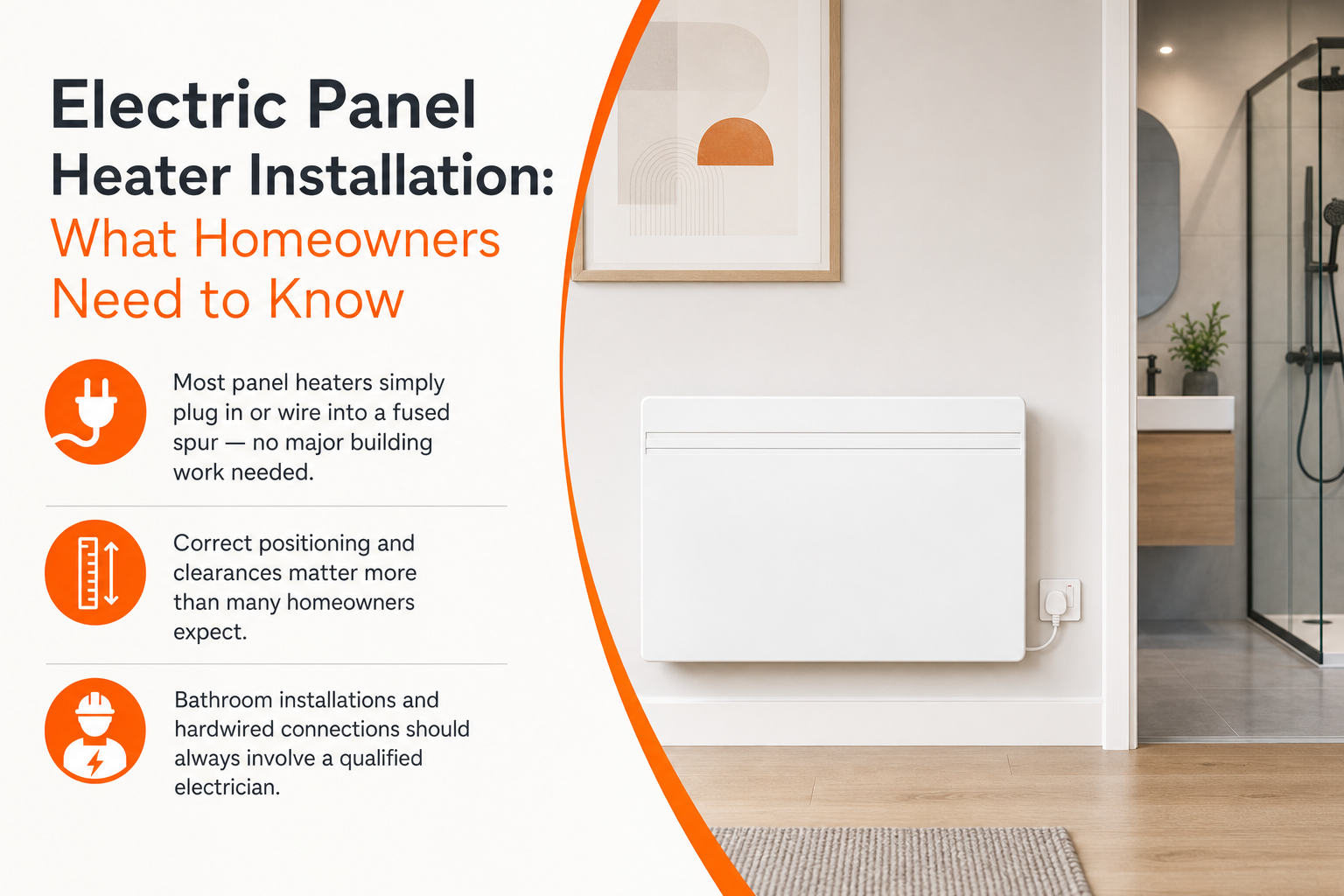
Worried that electric panel heater installation means chasing walls, rewiring rooms or a weekend of upheaval? It rarely does. For most UK homes, fitting a modern panel heater is one of the simplest heating upgrades you can make – and knowing what to expect removes the guesswork before you buy.
Key Takeaways
- Most panel heaters simply plug in or wire into a fused spur – no major building work needed.
- Correct positioning and clearances matter more than many homeowners expect.
- Bathroom installations and hardwired connections should always involve a qualified electrician.
How Electric Panel Heaters Are Installed
There are two common ways to install an electric panel heater. The first is a straightforward plug-in connection to a standard 13-amp socket. The second is a fixed, hardwired connection to a fused spur on the wall.
Plug-in models are ideal for renters and anyone wanting flexibility. You mount the heater on the wall using the supplied bracket, then plug it in. No electrician is required for this option.
Hardwired installation gives a cleaner, permanent finish with no visible cable or plug. It is the preferred choice for main living spaces and bedrooms. This work must be carried out by a qualified electrician.
Either way, the heater itself hangs on a wall bracket that takes only minutes to fix. The panel then simply clips or slots onto the bracket. This is why panel heaters feel so much simpler than plumbed radiators.
Do You Need an Electrician?
For a plug-in panel heater, the answer is usually no. If your room has a suitable socket nearby, you can mount and connect the heater yourself. Always read the manufacturer’s instructions first.
For any hardwired connection, you should use a qualified electrician. They will connect the heater to a fused spur and ensure the circuit is correctly rated. This protects both your home and your warranty.
Bathrooms are a special case. Electrical zones and moisture mean these installations are governed by strict wiring regulations. A registered electrician is essential here, with no exceptions.
Using a professional also gives you peace of mind and, where required, the correct certification. It is a modest cost against the value of getting it right. When in doubt, always ask a qualified professional.
A simple rule of thumb: if a plug is involved, you can likely do it yourself. If the wiring disappears into the wall, bring in a qualified electrician. Never attempt hardwired or bathroom work without one.
Where to Position Your Panel Heater
Positioning has a real effect on comfort and efficiency. Traditionally, heaters were placed under windows to counter draughts and cold air. With well-insulated modern homes, an internal wall often works just as well.
Choose a spot where warm air can circulate freely across the room. Avoid tucking the heater behind large furniture or long curtains. Blocked airflow means uneven heating and wasted energy.
Always follow the recommended clearances in the manual. Most panel heaters need a set distance above, below and to the sides. These gaps allow safe, efficient convection.
Consider the wall material too. Solid walls make for a very secure fixing, while stud walls may need the bracket fixed into a batten or noggin. A firm, level mounting keeps the heater flush and safe.
Regulations and Safety to Be Aware Of
Electric heating in the UK is covered by the wiring regulations, commonly known as BS 7671. For most plug-in installations these are handled by the manufacturer’s design. Your job is simply to mount and connect it correctly.
Fixed and bathroom installations are where regulations bite hardest. Bathrooms are divided into zones based on distance from water. The heater’s IP rating must match the zone it sits in.
A good electrician will confirm the circuit can handle the load and that protection is in place. They will also ensure the heater is earthed or double-insulated as required. This is not an area to cut corners.
A few habits keep any panel heater safe throughout its life:
- Never cover or drape items over the heater.
- Keep the recommended clearances clear at all times.
- Use only the correct IP-rated model in bathrooms.
- Check fixings occasionally to ensure they remain secure.
What Installation Typically Costs
A plug-in installation costs you almost nothing beyond the heater and a few basic tools. You will need a drill, a spirit level and the fixings supplied. Most homeowners complete it in well under an hour.
Hardwired installation adds the cost of an electrician’s time. A single heater on an existing circuit is usually a quick job. Fitting several at once often works out more economical per unit.
Compared with a wet central heating system, panel heaters are far cheaper to install. There are no pipes, no boiler and no lengthy disruption. This is a major reason many homeowners choose electric.
Remember to weigh installation against running control. Models with accurate thermostats and timers help you heat only when needed. Our electric panel heater range is built around precise, low-fuss control.
Getting the Most From Your New Heater
Once installed, a little setup goes a long way. Programme the timer to match your daily routine so rooms warm up just before you need them. This avoids heating empty spaces.
Set the thermostat to a comfortable temperature and then leave it. A modern panel heater holds a room steadily rather than blasting heat in bursts. Constant, gentle warmth is both more comfortable and more efficient.
Sizing matters as well. A heater that is too small will struggle in a large room, while an oversized one wastes energy. Check the recommended room size for each model before you buy.
If you are heating a whole home, our electric radiators collection can help you match the right output to each space. Thoughtful sizing at the start delivers years of easy, even warmth.
Final Thoughts
Electric panel heater installation is far simpler than most homeowners fear. For a plug-in model, it is often a genuine do-it-yourself job. For hardwired or bathroom fittings, a qualified electrician keeps everything safe and compliant.
Get the positioning, sizing and controls right, and your heater will repay the effort every winter. The hardest part is usually choosing the right model. Once that decision is made, the rest tends to fall into place.
With Norwegian-designed engineering and clean, understated styling, Adax heaters are built to make that choice an easy one. Comfort should feel effortless – and so should getting there.
Ready for effortless warmth?
Adax panel heaters combine simple installation with precise, Norwegian-designed control for every room in your home.